Quantitative Research is the most numerical method of researching there is, as it only involves numbers, statistics, graph figures and the like in order to gain an understanding over different correlations between different number figures. For example, comparing sales; Comparing sales most be done on most if not every company as its always shows what has done well in terms of sales, and it also tells the creators what people would most likely want to buy. An overview of what has sold the most and what soled the, least is perfect for product analysis, because then it could lead to understanding why something did so badly, and why other things did so well. This would then lead to improvements of the products, as they may have answers to why they did not sell very well.
Qualitative Research
Qualitative Research is a “must” research plan as it’s used by almost every major business in order to understand their customers minds. It plays an important part in selling your product and satisfying your customers. Satisfying customers is very important when it comes to selling, because it’s a very powerful way of creating bonds between people and your products, bonds that could potentially bring you more customers. Bonds such as customer trust, loyalty and satisfaction would result in more money heading your way. It will also improve the chances of word spread between people, and if they enjoyed your product, then good news will be spread.
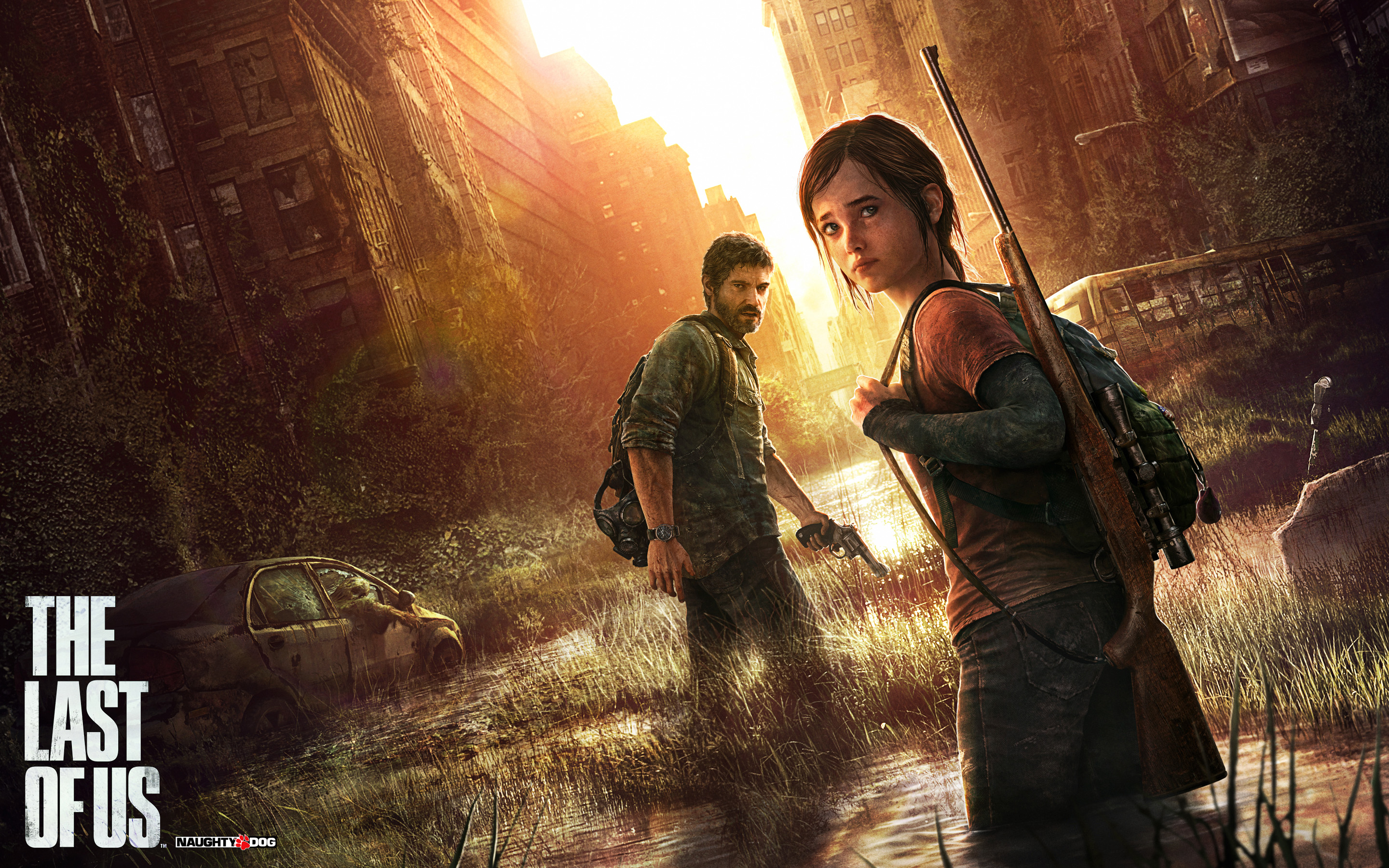
Action, Drama, Thriller……Zombies, Apocalypse, post-apocalyptic scenario, Survivors, strong script, real actors, real scenes. Film like environment and acting. Camera angles
Content - the way it looks and why. Its styling – words, images, sound, colors, fonts. The Last of us is a beautiful game, filled with mesmerizing and realistic nature that has overgrown on top of our urban environment. The games Hub is bland and white to match the blandness of the environment they live in. all the pictures and videos are made using natural and very bland colors, such as brown, green, grey, orange and black. Sounds in the game are also very natural and calming until trouble unfolds, or you’re fighting.
Construction - the way in which it is structured and how the interaction is constructed.
Starts like a film in the past, explaining what exactly happened/is happening, then moves to the present where a long time has past since the initial incident, teaching you how to defend yourself against the zombies. It the introduces the problem, and what the main character must do to overcome this problem/problems. And by the end, you have a very important choice. The game interacts with many quick time events, where the player must protect himself, giving the illusion that they're still playing a game, but still watching a film. The entire game basically only consists of scenes, that require the player to pay attention to as quick time events will show up.Starts like a film in the past, explaining what exactly happened/is happening, then moves to the present where a long time has past since the initial incident, teaching you how to defend yourself against the zombies. It the introduces the problem, and what the main character must do to overcome this problem/problems. And by the end, you have a very important choice. The game interacts with many quick time events, where the player must protect himself, giving the illusion that they're still playing a game, but still watching a film. The entire game basically only consists of scenes, that require the player to pay attention to as quick time events will show up.
Codes and conventions
Codes and conventions - Guaranteed and expected elements in this type of game, such as camera angles, music etc
Camera angles in a third person games are very important as they define the view the player will be experiencing as they play, especially when its a horror/thriller/action/adventure game.
Codes - The camera being behind and following the character/player is definitely found in a third person game, along with the game being told by the events that happen, and not a mystical voice or unknown higher power. Being also a horror game, jump scares are to be expected. Modes of address - This game is addressed in a formal way, as it is a very serious game. In all of its tailors it showcases the gore and violence within the game, including most of the threats that you will be facing in the game.
Audience Response The Hypodermic Needle Model
Back in the early 1920s, this theory was used to explain how mass audiences would or might react to mass media. The audience receive an intravenous injection of a media text, either positive or negative and are stimulated into a response, for example, putting "Donald trump claims to regret building walls" in a paper, would cause a lot of talking about him becoming the new president and would make people think it was a good idea electing him as president. This is a short-term effect and the audience is seen as passive and malleable. The Inoculation Model
This theory suggests that being exposed to long term mass media causes the audience to become in a way immune to its effects eventually. The audience is desensitised by the media text and can no longer be shocked by it. Someone sensitised is more likely to commit a violent act as it is not seen as an extraordinary action. Again, the audience is seen as passive. The Two-Step Flow Model
This is the theory that people will sometimes require a "second opinion" from their opinion leader in order to agree or carry something out. For example, if my teacher told me that eating a banana every day is bad for you, i would ask my friend too and see what his opinion is on the matter. Paul Lazarsfeld, Bernard Berelson, and Hazel Gauntlet conducted a study in 1940 during the presidential election. They found that 50% of voters had made up their minds six months before the election and did not change their minds despite the influence of media debates and coverage. In addition, it was found that individual views were most affected by opinion leaders who played a key role in the communication process, filtering the message. The Uses & Gratifications Theory
During the 1960s, as the first generation to grow up with television became grown ups, it became increasingly apparent to media theorists that audiences made choices about what they did when consuming media texts. Far from being a passive mass, audiences were made up of individuals who actively consumed media texts for different reasons and in different ways. The reasons usually consist of these 4:
Information Personal
Identity Integration
Social Interaction
Entertainment
Information Personal
The need to be informed – press, broadcast and online news.
Seeking advice on practical matters – how to fix the toilet.
Satisfying curiosity and general interest – pub quiz.
Learning; self-education – formal learning e.g. An OU course Identity Integration
Social Interaction and Social Interaction
Comparing our own roles and values with similar roles and values represented in the media – buying Loaded to be one of the lads or referencing a soap opera to see how other teenagers behave in relationships. Seeing yourself in the game. Most people can be convinced into liking games and feeling like they reflect their personal desires and opinions. The need for companionship and interaction with others: Identifying with others and gaining a sense of belonging Having a substitute for real-life companionship Enabling one to connect with family, friends and society This can be through viewing fictional characters as friends, having the radio on all day for company or social media like Facebook.
Entertainment
Fantasy, escaping, or being diverted, from problems Relaxing Filling time Emotional release
The Reception Theory
Extending the concept of an active audience still further, in the 1980s and 1990s a lot of work was done on the way individuals received and interpreted a text, and how their individual circumstances (gender, class, age, ethnicity) affected their reading.
The entire theory says that people will encode information onto a medium, or in this case a shop owner, then the shop owner will sell this product to the buyer and they well have to decode that product in their own way. The way the consumer(buyer) consumes and used this product is all dependent on how it is decoded. For example, a game could be made to be very funny and entertaining, but some parents might just find it completely inappropriate and dumb. This means that she has received and decoded that product and decided from her experience that it should not exist.
This theory points out that meaning of any media text is created by the audience - not the producer. Meaning is encoded into the media text but it is up to the audience what they take from it depending how they decode the signs within the text. Broadly speaking the audience can arrive at one of three readings:
The Preferred Reading - Audience understands and accepts the ideology offered.
The Negotiated Reading - Audience understands the ideology offered, accepts some aspects of it but rejects other aspects.
The Opositional Reading - Audience interprets the ideology offered in the opposite way than it is intended.
As a conclusion, Primary
Research can be very important, as it’s personally more reliable, and more
understanding. But, some forms of Primary research are simply a matter of
opinion, such as the idea of playing a game, which is a type of research, but,
not Primary.
Computers
are constantly recording human activity, meaning this is another way
of acquiring data. Collecting this data would also count secondary
data because it was gathered by other means besides your own, you
simply took that data and decided to use it. Even if this data is from your
own technology and about you own company, it still counts as
secondary as you didn't do the tests and research on your own. However, when using secondary research be careful how you
interpret it, as it may have been collected for a different purpose or from a
market segment that isn't relevant to your business. Also make sure that any
secondary information isn't out-of-date, as the market can change quickly and
this will affect your results. In conclusion to my research in gaming and how they impact gamers, i have found that it is not games that cause violence in people , but it is how the gamer perceives the game and what response they have to it.
Primary Research Primary research is the idea of creating a method that can help you gather data, so that it can be used as information by others. Primary research is the research done by oneself without any help, or beforehand information. Information is we raw data is used towards an idea, therefore it becomes information. For example, if I wanted to know how to beat a game without asking anyone and without looking on the internet, I would have to play the game myself and figure it out for myself. This way, everything I learn, is only raw data because no one has explained it to me, and I gathered this data by myself. For this data to be used as information, it must be explained on a graph of some sorts. This information will then be secondary to any second hand person (to anyone but you). QualitativeResearch
Qualitative Research Consists of open question that require more than just straight one-word answers. It plays an important part in learning crucial information on people that play your game, such as the kind of people they are, why they like you game and what they like about it the most.
Below is an example of Qualitative research. This research was conducted on the smartphone app Pokemon Go and covers the reasons why people liked it so much upon release, such as addiction, fun, and time consumer. We asked them several questions designed to give us an idea of the kind of people they are, asking them about their usual daily routines and habits ion order to conclude the type of audience and play Pokemon Go
QuantitativeResearch Quantitative Research consists of closed questions that get straight to the point. Theses questions can be recorded using numerical methods such as graphs and tables. Using such methods makes it much easier on the reader to decode the data that is being provided from the research. For example, asking "Have you played this game?" can only have two answers which are yes and no, meaning it is a closed question. Below is an example of qualitative research, a sheet that we used to conduct our research on Pokemon Go players on campus. We asked people about Employment, Pokemon Go playing time, area of residence and many more.
Devil May Cry Primary research
For my primary research I devised a small survey for my class to take based on Devil may cry, specifically designed for targeting and defining the audience. I asked questions based on the persons way of living and habits, for example, their employment status or where they live.
Audience Profiling
This is when you segment your target audience and you include multiple target markets which will have or more demographic characteristics in common with each other.This data usually involves age, race, religion, income level, gender, profession, family size and many more. We created a video on a discussion of the subject "Are Video games really bad for you?"
Me and my team created a questionnaire for people who play Pokemon GO, a very addicted phone game that has recently become world wide sensation that has everyone talking. We created this qualitative questionnaire in order to understand how people felt about the game, in terms of how it works, is it a good Pokemon game? or is it even fun, if yes, how much. We also recorded information on their age, how much they play they game, and how far they have traveled to play or catch a Pokemon before.
Secondary Research
Secondary research is very similar to primary research and a probably be described as the most used in this era. Except, with secondary, all the information that is used is second hand, hence the name. For example, if I was to go on Google and search for something that I’m currently interested in, and then happen to fall upon a website that gives me all the information that I need, that information would be second hand, and so I have carried out, secondary research. An advantage of secondary research is the work is already basically done for you; all you have to do is search for what you need.
Secondary research is used a lot in the world of today; it’s almost all types of research that must be done as it’s anything that someone else has done and you are simply looking over it. Even though its second hand and it may not be able to fully express your own personal feelings, it can still help reflect your own opinion from theirs. Here is an example of secondary research -
UK games: more women play games than men, report finds
A new study into British gaming habits has confirmed what many industry watchers have been observing for years: the stereotype of the teenage boy playing alone in his bedroom is well and truly dead.
Based on interviews with 4,000 UK residents, the research asserts that women now account for 52% of the gaming audience, up from 49% three years ago. The study, which was commissioned by the Internet Advertising Bureau, also revealed there are now more people over 44 years old playing games (27% of the audience) than children or teenagers (22%). The gamer audience reportedly stands at 33.5 million Britons – 69% of the population.
Devil May Cry Audience Secondary Research Qualitative research Quantitative and Find out what audience is. Devil May Cry is a hack and slasher action adventure game, who's audience can be hard to define due to its intricate and complex style of genre. I have started my research by digging into the games play style and graphics. Being a hack and slashing game, very fast pace music and and fighting is to be expected when decoding this game. This would lead me to believe that most people that play devil may cry are fast pace players that require a lot of frames of actions and intense graphics in order to be satisfied. I can agree with this a I am a Devil May Cry player myself. So in order to find out who the audience is, i have devised a questionnaire for my peers.